
Head position is one of the most overlooked aspects of swimming, yet it plays a fundamental role in balance, body alignment, orientation, and stroke efficiency. Unlike walking or running, swimmers move through water without contact with the ground and in a horizontal position. These unique conditions completely change the reference points the brain uses to control movement.
Why Head Position Matters in Swimming
On land, your eyes naturally help you maintain balance and direction by using fixed visual landmarks.
In the water, most of these reference points disappear. Your head position—and where you focus your eyes—becomes essential for maintaining a straight line, refining your technique, and improving performance.
Swimming with your eyes closed removes much of the information your brain uses to understand your body’s position in space. Conversely, learning where to look while swimming helps you stay on course, become more efficient, and even identify technical flaws. Like breathing or propulsion, proper head position is a skill that every swimmer should develop.
Head Position for Every Stroke
Butterfly
In butterfly, head position contributes to both stroke technique and direction.
Because butterfly requires excellent coordination, visual feedback helps swimmers better control their movements.
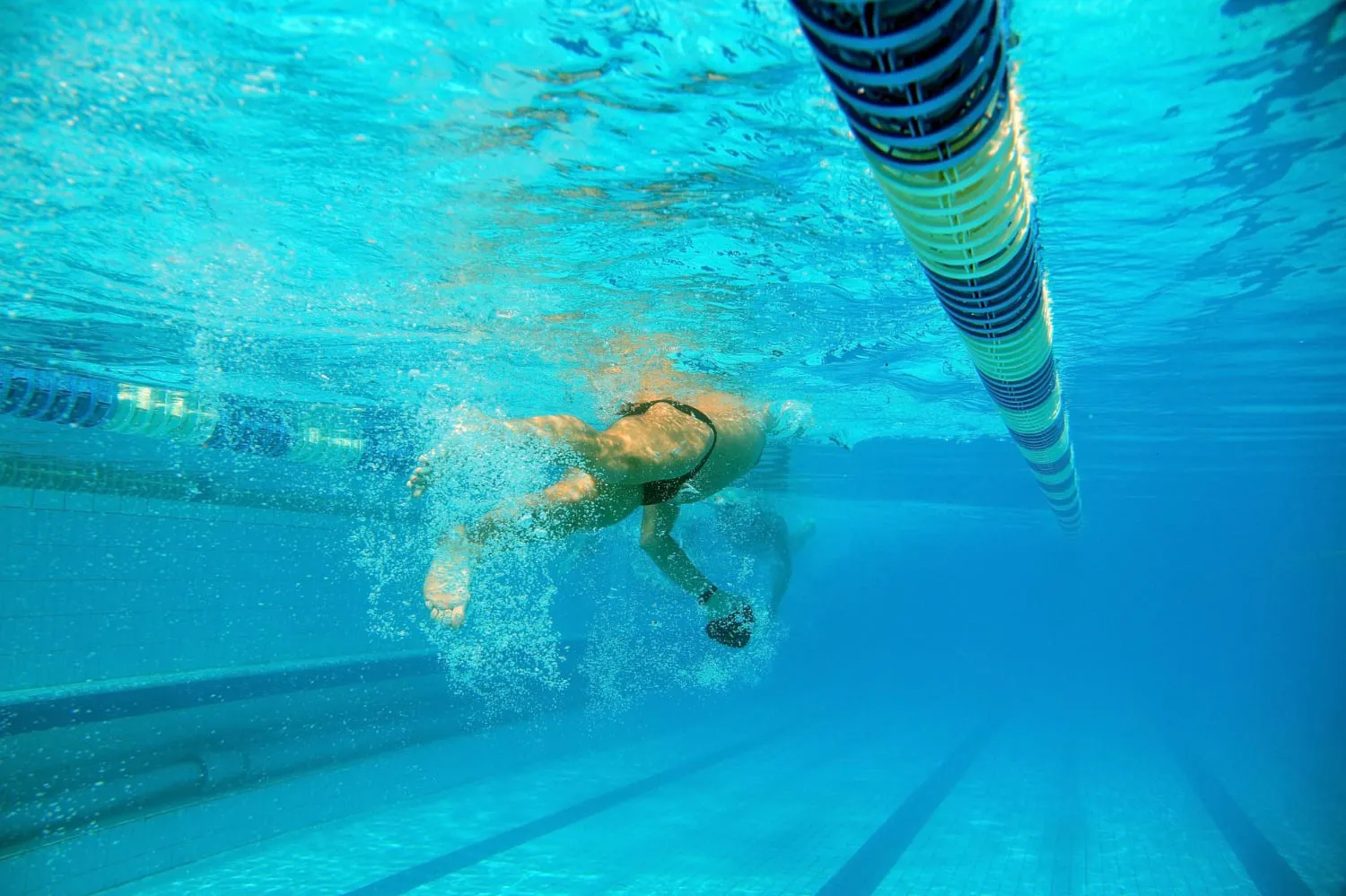
When the head is underwater, your eyes should naturally focus on the black line at the bottom of the pool. This helps you swim straight while avoiding unnecessary lateral movements.
You can also watch your hands during the underwater pull to compare what you see with what you feel. This is particularly valuable during technique drills, as visual feedback often accelerates learning.
When lifting the head to breathe, your vision serves several purposes:
- Confirm your direction.
- Judge the remaining distance to the wall and prepare your turn.
- During races, use peripheral vision to monitor nearby swimmers.
Backstroke
Head position is especially important in backstroke because you cannot directly see where you’re going.
Visual reference points become essential for staying centered in your lane and preparing turns.
During underwater dolphin kicks after the start or turns, your eyes help estimate your distance from the surface. This allows you to adjust your kick and body angle while staying within the 15-meter competition limit. During training, visual awareness also helps avoid collisions with other swimmers. Useful visual references include:
- The ceiling (if it has regular patterns) and lane ropes
- Backstroke flags
- Fixed objects around the pool
Breaststroke
In breaststroke, head position contributes to both navigation and technical efficiency.
Every breath provides an opportunity to check your direction and anticipate the next turn.
Peripheral vision is also an excellent technical tool. During the arm pull, you should be able to keep both hands visible at the same time. This helps monitor stroke symmetry and prevents overly wide movements that increase drag.
You can also assess the quality of your forward extension after each stroke. A full extension promotes better streamline and improves efficiency.
During the glide and underwater phase, your eyes should focus on the bottom of the pool. The black line provides directional guidance, while judging your distance from the bottom helps you time your return to the surface.
Freestyle: Pool and Open Water
Underwater, freestyle swimmers primarily use the black line on the bottom of the pool to maintain direction. The “T” marking before the wall is another valuable visual reference for preparing turns. During underwater glides, your eyes also help judge your depth and determine the best moment to surface.
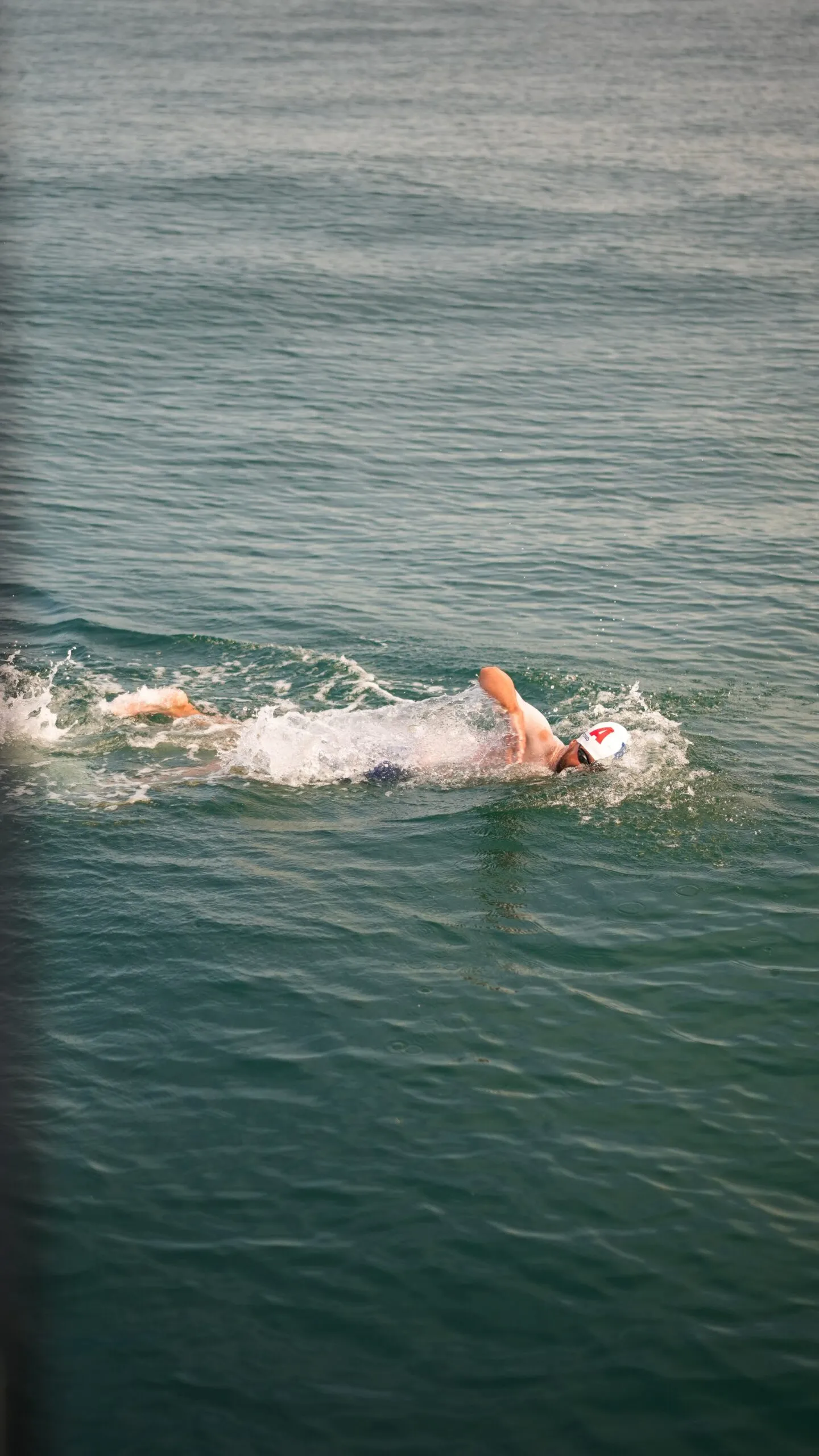
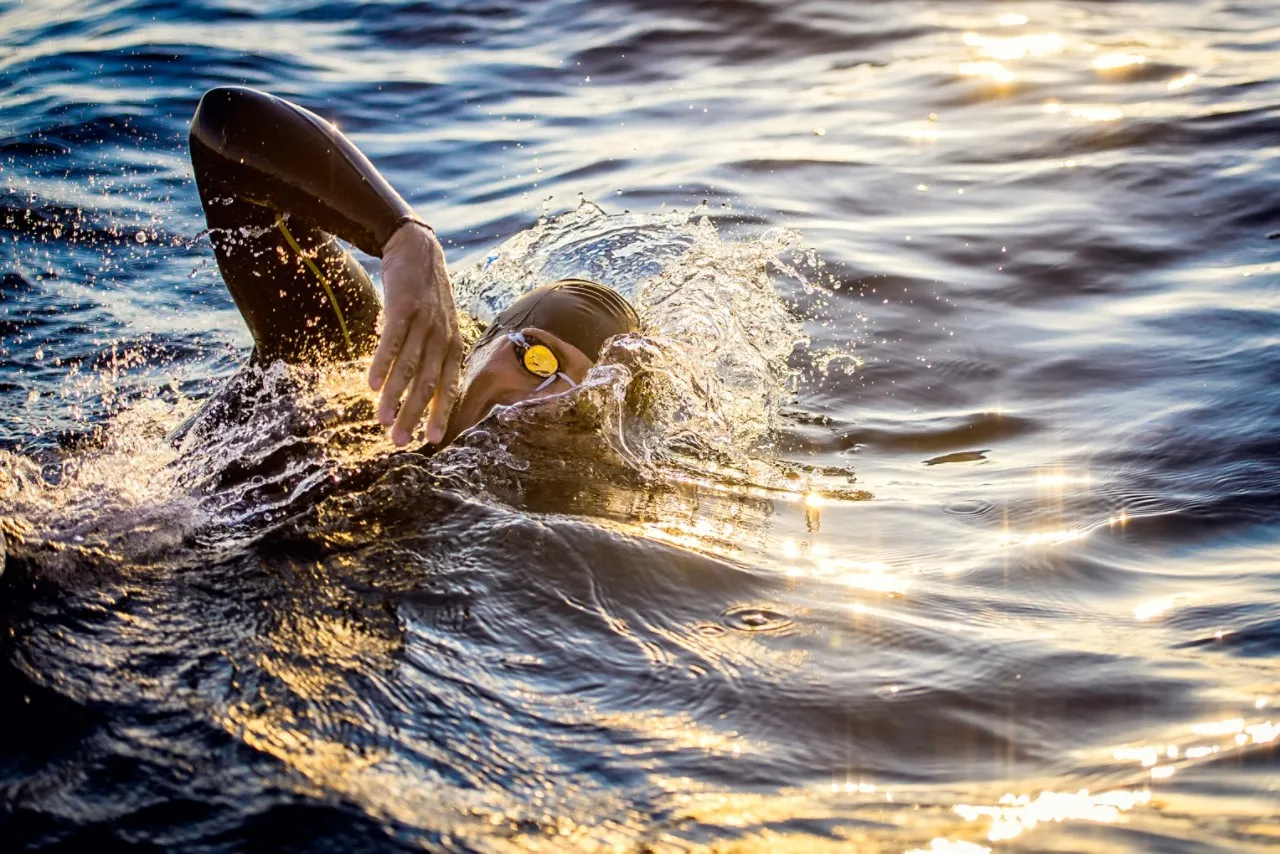
When turning the head to breathe, your gaze should remain approximately 90 degrees from your body’s axis. Looking backward disrupts body alignment, causes the hips to sink, and reduces propulsion efficiency. Instead, keep your eyes close to the water’s surface while breathing to maintain proper alignment.
In open water, visual awareness becomes even more important. Swimmers must regularly lift their eyes forward to check their direction—a technique known as sighting. Sighting allows you to stay on course, avoid obstacles, locate buoys, and estimate the remaining distance.
Head position is much more than simply seeing what’s around you. It is a powerful technical tool that directly influences your balance, alignment, direction, and overall efficiency in the water.
Whether you swim butterfly, backstroke, breaststroke, or freestyle, learning where to look at the right moment will help you better understand your movements, maintain a straighter line, and develop a stronger feel for the water. Mastering this often-overlooked skill will make your swimming smoother, more efficient, and ultimately faster.