
Going to the pool is often a moment just for you: to unwind, to train, to clear your head. But in a shared pool, the quality of your experience also depends on following a few simple swimming etiquette rules. Mastering the pool isn’t just about your stroke mechanics; it’s about knowing how to share the water. Here are the core rules of the road to ensure every swimmer—regardless of pace or experience—gets the most out of their workout.
Follow the direction of traffic
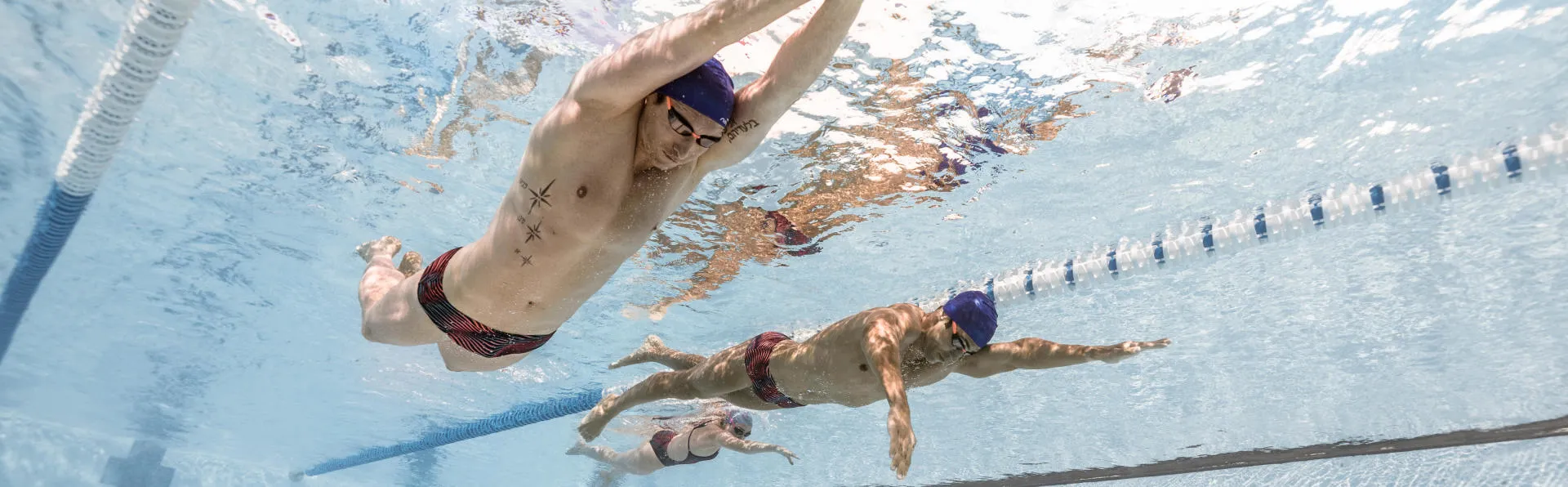
Just like driving, lap swimming has a strict traffic pattern. In most pools, we circle swim in a counter-clockwise direction, staying to the right side of the lane. Sticking to this fundamental rule is non-negotiable for preventing head-on collisions and keeping the lane flowing smoothly.
Passing without disrupting the lane
- How do you pass another swimmer correctly? Before overtaking, take a moment to check behind you, then ahead. If there’s too much risk of meeting an oncoming swimmer head-on, it’s better to wait. Once the coast is clear, pass on the left, pick up your pace decisively, then cut back in only once your feet are past the head of the swimmer you overtook.
- Being overtaken without creating tension. Being passed isn’t a judgment on your swimming. Hold your pace, or even slow down slightly, and move over to the right to leave room. If traffic is heavy, don’t hesitate to make it easy for the other swimmer to pass at the wall.
Follow the direction of traffic
- Avoiding annoying behavior: Touching the feet of the swimmer in front of you is one of the most unpleasant things that can happen in a pool. If the pace doesn’t suit you, slow down and pass as soon as you can. Also avoid stopping abruptly mid-length, except in an emergency. If you’re dealing with foggy goggles, discomfort, or a cramp, roll onto your back or hug the wall to let others pass.
- Sharing the space wisely. Unless you have a lane all to yourself, you’ll need to share it. Stick to the right side, avoid swimming butterfly when the pool is busy, and stay mindful of your trajectory, especially when swimming backstroke.
A good trick is to follow the lines on the ceiling (beams, pipes, markings) to help you swim straight.
Adapting your swim to a shared pool
How busy the pool is should shape your training. When it’s crowded, it’s best to avoid sprints, highly broken-up sets, or stop-and-go starts every 25 meters.
Favor continuous distances, group the same strokes together, and limit how often you switch things up. This makes the session more enjoyable, both for you and for everyone else.
Gear and organization at the wall
- Fins, paddles, and other equipment: When using fins or paddles, stick to the lanes set aside for them. This gear can be hazardous in a space that isn’t suited for it. On the flip side, avoid entering those dedicated lanes if you’re not using this equipment — the goal is to keep the swim flowing smoothly, not to complicate it.
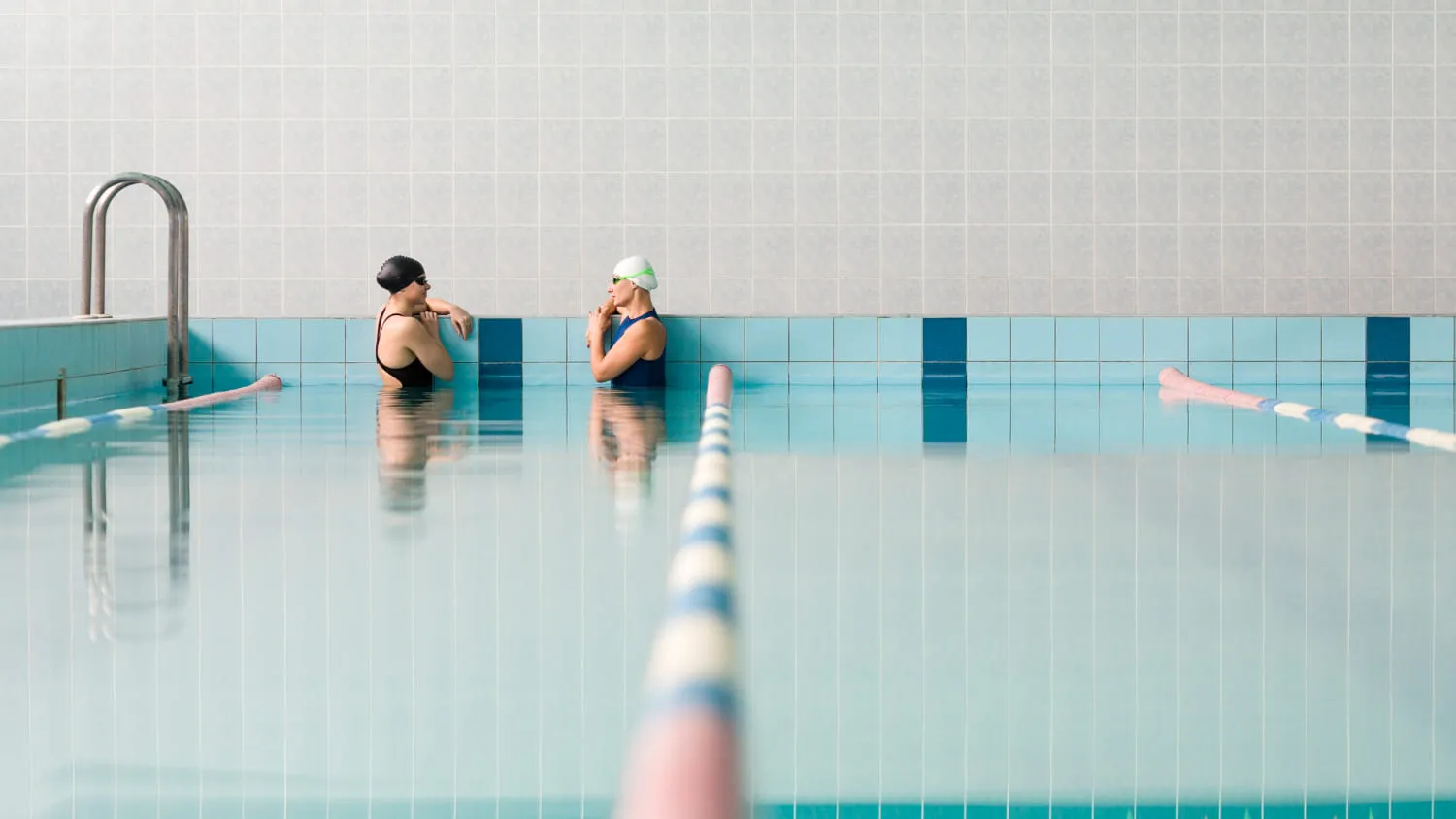
- Managing your breaks at the wall: If the wall is crowded, avoid holding onto it. Going around the wall instead helps you keep your rhythm and is also good practice for open water swimming.
When you do stop, try to leave some open space, ideally in the center, so other swimmers can turn comfortably.
One last rule of the pool: courtesy
Adopting good habits at the pool makes every session smoother, more enjoyable, and more effective. By following these simple swimming etiquette rules, everyone helps create a relaxed atmosphere and a harmonious swimming experience, no matter their level or goals.